What Fails on a Mount Lawley Line Is the Joint, Not the Barrel
Glazed earthenware doesn’t give way along its length. It gives way where two lengths meet, at a mortared joint that has moved a fraction, and a root finds that joint because it is the one damp opening in an otherwise sound pipe. Roots don’t drill into pipe that has nothing wrong with it. The planting they travel from is the planting the heritage records value here: the established landscaped gardens these houses were built into, plus whatever the verge has grown over a century. Old jointed pipe under a mature garden is why the first question our plumber answers on a Mount Lawley call is whether roots are in the line.
Two things follow from that, and they shape the whole job. The run is long, so the fault is frequently nowhere near the fixture that is overflowing, and a camera travels a good distance before it finds anything. And this is not the estate case. A Mount Lawley line was never rubber-ring PVC, so a blockage that returns year after year is describing the pipe rather than the household, where on an estate laid in the 1990s that reasoning runs the other way round.
Same-Day Cover for the Job Nobody Calls an Emergency
A drain overflowing into the house or out across the garden does not wait for business hours, and we take that call at any hour of any day. Leave the fixtures on that line alone until a plumber is at the door. The overflow relief gully in the side garden exists to give the overflow somewhere outdoors to go, so keep its grate clear of leaf litter and mulch.
The other Mount Lawley call has been waiting since winter: a laundry that empties slowly, a gully that gurgles when the toilet goes, an inspection somebody suggested at the last blockage. MCN’s same-day guarantee is what covers them, provided the call reaches us before 10:30am on any day, and a routine clear qualifies for it exactly as an emergency does. Miss the morning cut-off and the visit moves to tomorrow, which is all the condition amounts to. It matters to the property managers and facilities contacts who book a fair share of the work here, across tenanted houses and flats near the TAFE campus and the institutional premises down towards the river. A routine job booked in the morning and finished that afternoon fits an occupant’s day.
The Order MCN Plumbing Perth Works In on a Period Block
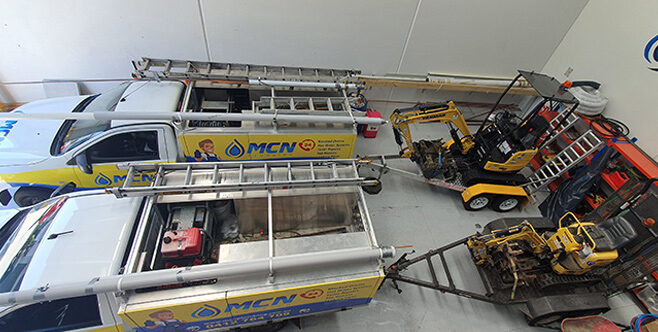
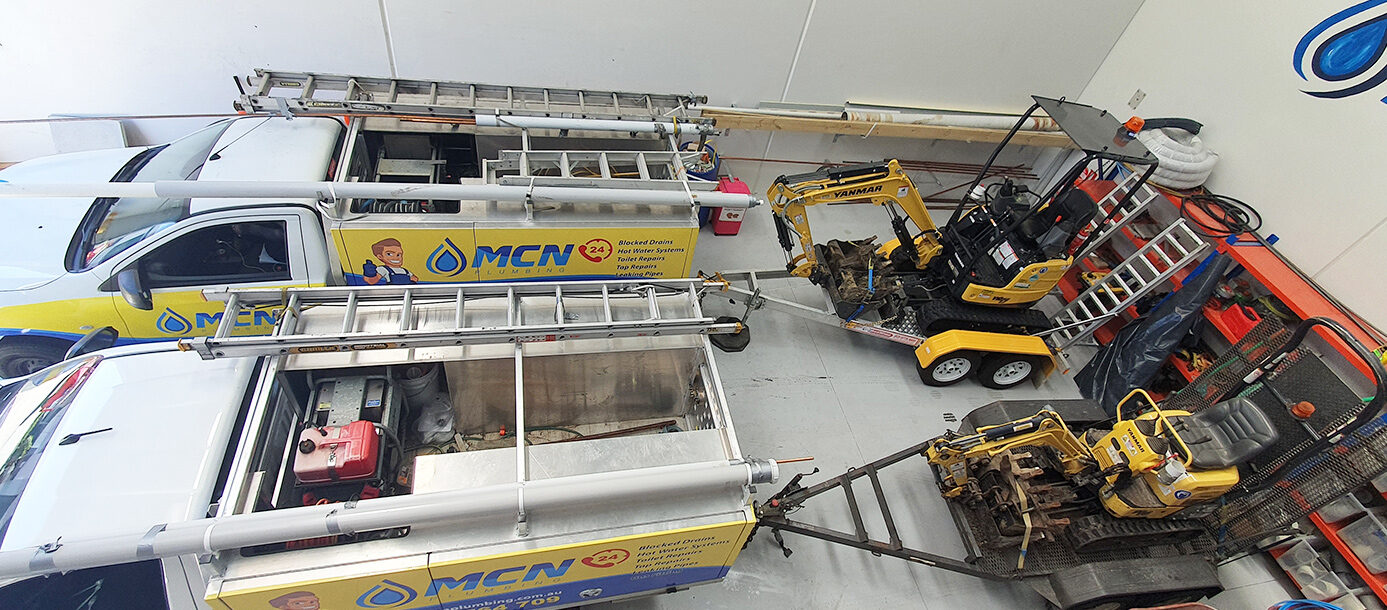
Milad Nasr set MCN Plumbing Perth up in 2015, and it has worked drains across the Perth metropolitan area ever since. A Mount Lawley job shows up as one van carrying both the jetter and the camera, so the first visit ends with the line running and the cause on record. Our blocked drains page lists the guarantees, the undertaking to work clean and non-invasively among them.
Nothing Comes Up Until the Footage Says It Has To
Work up from what you have already tried, and notice how little of your ground each step asks for.
Whatever the supermarket sells for a slow drain is working on soap film and hair in the trap under the fixture, and it stops there. A hand auger gives you the bend below that trap and nothing past it. A jug of boiling water moves fat along the pipe without taking any of it out, and it does nothing whatever to a root. None of the three gets near the stretch of a Mount Lawley line where the trouble is, because that stretch is a garden away.
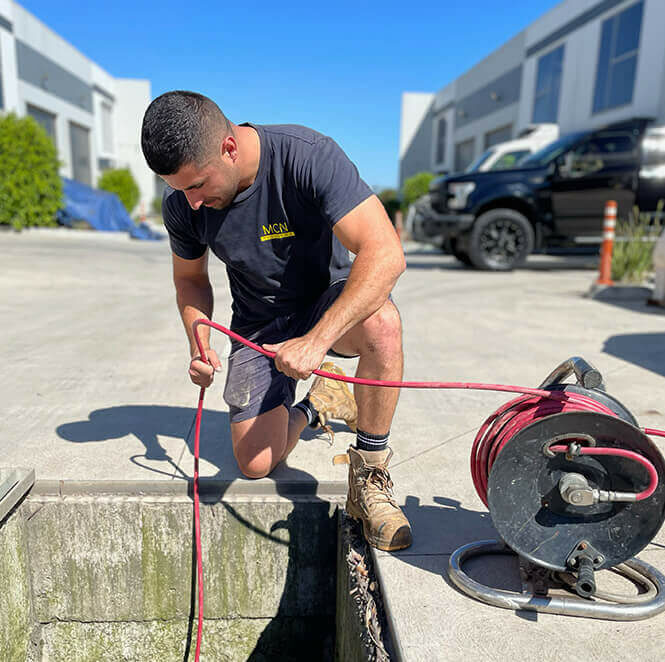
A machine clear or hydro jet cleaning is the first step that does reach it, and it still opens no ground. Our plumber works from an existing inspection opening or a gully outside the house, and a jet cleans the pipe out to its full bore instead of drilling a channel through the blockage and leaving the rest behind. Where fat, wipes or something a bathroom lost put it there, that ends the job.
The camera goes in through that opening too, which is not luck. AS/NZS 3500 sets the rules for sanitary drainage in this country: what a drain may be built from, how a plumber forms its joints, the fall it runs at, and the inspection openings and access points it has to provide. Those required openings are why AS/NZS 3500 leaves even a hundred-year-old run readable from the inside, with nothing lifted. What returns on the screen is the condition of the pipe itself: an open joint, a fracture, a length dropped out of grade, root hair through a mortared seam, a newer branch cut carelessly into the old main. Everything the camera passes is logged against a distance from where it went in, so a fault has a location on your block instead of a description.
Only the last step raises the question of opening anything at all. Two clears with clean footage behind them describe a usage pattern, and the answer to that one lives in the kitchen and the bathroom rather than in the ground. Footage showing an open joint or a fractured length says the pipe itself has failed, and clearing it again buys a season. Pipe relining repairs that length in place, working inside the pipe, so the lawn, the path and the verge above it stay whole. Where excavation is genuinely the only route, the footage has already fixed the spot, so the opening is a small one and you know what has to be reinstated before anyone starts. What we quote for that work is what you pay when it is finished, which is the second thing an owner wants nailed down before signing off a repair.
Where Your Drain Stops Being Yours, and Where the Verge Begins
Ownership of the drain ends at one point, the connection at your property boundary. Everything on the house side of it belongs to the owner to maintain, no matter which of them, owner, tenant or managing agent, picks up the phone. Beyond it the main belongs to the Water Corporation, and a failure on the utility side goes back to the utility.
On a period block that boundary falls a long way from the back door. Nearly all of the ageing pipe on the property is yours to maintain, and nearly all of the camera work happens on your side of it. Worth doing while the drain behaves: have the attending plumber show you where that connection is, and note it on a plan. It turns “somewhere out the front” into a fixed point to measure from.
Stormwater runs on its own pipes and pits, and nothing in it enters the sewer a plumber attends. Roof and hard-paving runoff goes to soakwells in your own ground, while the pits and pipes out in the street are council assets, so report a street drain that ponds after rain to the council, not to us. And where the fault lies past your connection, under the verge, the ground above it is road reserve, not yours. That brings a third party into the job.
The Verge Tree in Your Drain Belongs to One of Three Councils
One suburb name, three local authorities, and on a drain job that is not trivia. North of Walcott Street, Mount Lawley answers to the City of Stirling. South of it the City of Vincent takes over, covering the ground south of Walcott and east of Norfolk Street, out to the river. The City of Bayswater takes a small eastern portion, and Stirling holds the larger share of the suburb. Which of the three you deal with depends on which side of those lines your address falls, and the rates notice for the property settles that in a second. It decides who you speak to about a verge or street tree, about anything a repair has to do inside the road reserve past your boundary, and about a street drainage pit that ponds after rain.
Those councils also hold the instruments that make reinstatement the governing question here. Stirling carries Local Planning Policy 3.1, which sets character retention guidelines for Mount Lawley and Menora, and it holds a Heritage Protection Area here as well, along with recorded protection for traditional homes built before 1960 against demolition. On the Vincent side the instruments are a Municipal Heritage Inventory and a Heritage List, with a staged review still working through them. What all of it protects is the fabric a trench would have to cross, so the real question on a failed drain here is not whether a plumber can reach the pipe. It is what would have to be rebuilt afterwards, and under whose approval. Menora shares that policy, which is why a drain repair over that boundary meets an identical constraint on opening the ground.
Down at the River End, a Winter Fault Is Telling You Something Else
The suburb is not one piece of ground. Its eastern end runs down to the Swan River on low land where the water table climbs through the wet season, while the elevated streets over on the Beaufort Street side never meet that condition. Two addresses in one suburb, and the drain under each behaves differently.
Watch the calendar, not the fixture. A line that surcharges through winter and runs clear all summer is describing water getting in, not waste failing to get out. Groundwater entering through a cracked or displaced section fills a run that carries a household’s waste without complaint in January. Clearing changes nothing there, because there isn’t an obstruction to clear. The camera finds where the water enters, and relining that length closes the entry without opening the ground above it.
Book a Clear and a Camera on One Mount Lawley Visit
Two things travel out on the van to a Mount Lawley address: the jetter and the camera. Phone 0418 871 934 with the street name, the fixture that stopped, and whether anyone has opened the ground out the front before. Written bookings reach info@mcnplumbingperth.com.au or the enquiry form here. You will know by the end of it whether this was the household or the pipe, and the lawn won’t know we were there. Anything else needing a plumber at the property goes in the one visit through our Mount Lawley plumbing service.

 0418 871 934