
 0418 871 934



Who Pays When a Drain Blocks in a Strata Complex in Perth? You, the Strata Corporation, or Water Corp?
A blocked drain is a real inconvenience, but even more so when it happens in a strata complex. Unlike free-standing homes, blocked drains in an apartment are a little more complex as it comes down to one important question:
Is the blockage located on private lot property, within common property, or inside Western Australia’s public utility network?
Where it occurred and on what boundary determines whether an individual unit owner, the Strata Company, or Water Corporation is responsible for calling in a plumber and paying for the associated costs.
Making assumptions without independent professional verification leads to inter-owner disputes, delayed emergency repairs, and rejected insurance claims. That’s why we’ve created this guide. Read on for everything you need to know.
The Three Boundaries: Lot Owner, Strata Company, or Water Corp?
In Western Australia, strata drainage responsibility falls into three distinct legal jurisdictions:
1. The Individual Lot Owner
Most of the time, an individual lot owner is responsible for the repair, clearing, and maintenance of all internal plumbing fixtures and private branch pipes located within their lot boundary that serve only that specific unit.
This includes:
- Sinks, basins, showers, floor wastes, and toilet pans inside the apartment or townhouse.
- The internal waste branch running from a fixture up to the point where it connects to a shared vertical stack or common sewer line.
- Any external pipework or fixtures allocated strictly for the exclusive use of that individual lot on the registered strata plan.
If a blockage occurs because a resident flushed non-flushable wet wipes down a toilet, poured cooking fats down a kitchen sink, or allowed foreign objects to lodge in an isolated branch line, the lot owner must cover all associated plumbing costs.
In many new, high-density developments where residents call for urgent assistance with blocked drains, individual unit backups are frequently traced back to internal fixture misuse or foreign object obstruction within the property.
2. The Strata Corporation (Strata Company)
The Strata Company is legally responsible for maintaining and repairing all common property drainage infrastructure. In this sense, ‘ common property’ refers to any pipework, pit, channel, or pump that services two or more lots or resides on shared land outside individual unit boundaries.
Common property drainage assets include:
- Main vertical sewer stacks running through multi-storey walls or building service ducts.
- Underground horizontal sewer mains running beneath common driveways, car parks, or landscaped gardens.
- Stormwater drainage pits, gully traps, soakwells, and surface grates designed to collect rainwater runoff across the scheme.
- The main private sewer line leading from the building up to the Water Corporation main connection point.
If a shared sewer line collapses under a common driveway or becomes blocked with debris, the Council of Owners must cover the plumber’s invoice using the strata scheme’s administrative or reserve fund.
3. Water Corporation (Water Corp WA)
Western Australia’s Water Corporation operates and maintains the public water and wastewater network across the Perth metropolitan area. Water Corp’s jurisdiction begins at the main public sewer asset or the main sewer junction serving the strata property boundary.
Water Corp is responsible for rectifying blockages when:
- The obstruction exists within the public sewer main running beneath the street, verge, or rear council easement.
- A structural failure or collapse occurs on Water Corp’s side of the main sewer junction.
Important Legal Requirement in WA: A unit owner or strata manager cannot simply phone Water Corporation and request an emergency crew without prior plumber verification. Water Corp mandates that a licensed plumber attend the property first, locate the inspection shaft (IO) near the boundary trap, and officially confirm that the surcharge is caused by a main line failure on Water Corp’s network.
Once verified on-site, the licensed plumber contacts Water Corp directly on their dedicated trades line to log the fault. Water Corp will then dispatch an emergency response crew to clear the main at no cost to the strata scheme.
Common Strata Drainage Issues in the Suburbs of Perth
Flushing Objects Down the Toilet or Drains
It might be intentional or accidental, but either way, flushing non-flushable objects down the toilet or drain is a primary cause of emergency plumbing backups in multi-unit developments. Wet wipes, sanitary products, paper towels, and foreign debris regularly jam internal branch lines, and vertical sewer stacks are usually the culprit here.
If a resident flushes inappropriate objects that clog a pipe but it’s only servicing their individual unit, that lot owner bears full financial responsibility for clearing the blockage.
However, if the flushed objects travel downstream and cause a major obstruction in a shared main line servicing multiple apartments, the Strata Company must arrange the immediate emergency clearing.
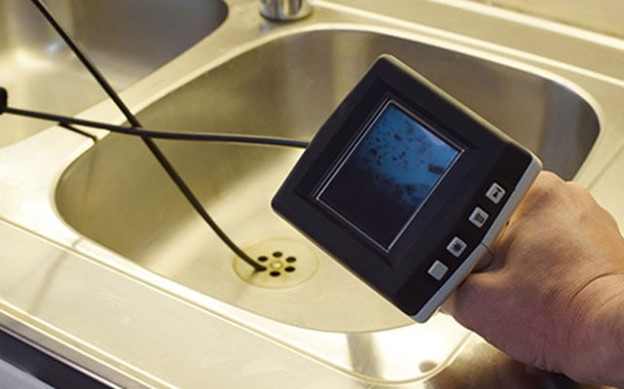
CCTV drain cameras may be used to gather evidence to recover all costs from the responsible resident.
Commercial & Residential Mixed-Use Fat Accumulation
In areas with commercial strips and industrial-adjacent residential precincts, grease and trade waste present a massive maintenance hazard.
Complexes requiring urgent work for blocked drains often have ground-floor food tenancies operating directly beneath residential apartments.
If fats, oils, and grease overflow from a commercial kitchen branch into the main shared sewer run, the resulting backup impacts upper-floor residents.
While the Strata Company must arrange immediate emergency clearing of the shared line, statutory cost recovery mechanisms allow the council to re-bill the entire expense to the commercial lot owner responsible for the trade waste violation.
Stormwater Overflows & Saturated Soils
Perth’s intense winter rain squalls regularly test urban stormwater networks. Multi-unit schemes built near low-lying terrain or clay soils frequently experience problems with blocked drains.
When silted soakwells, blocked pit grates, or failed subsoil drainage cause surface water to pool around ground-floor units or basements, responsibility sits firmly with the Strata Company to clear and maintain these common drainage assets before structural water ingress occurs.
Strata Drain Responsibility & Cost Allocation Breakdown
Under the Strata Titles Act 1985 (WA), maintaining drainage infrastructure requires a clear legal division between private property, common property, and public utility mains.
For Councils of Owners, strata managers, and unit owners across Perth, understanding these boundaries and having a licensed plumber perform an immediate diagnostic inspection is the only way to ensure costs are legally allocated and wastewater flows freely.
To streamline decision-making during a plumbing emergency, review these common drainage issues based on WA strata guidelines and Water Corporation boundary protocols:
- Blocked Toilet, Basin, or Shower Inside a Single Apartment: Serves one unit only. The individual lot owner is responsible and pays out of private funds.
- Foreign Objects or Wipes Jammed in a Private Branch Line: Serves one unit only. The individual lot owner is responsible for all clearing costs.
- Blocked Vertical Sewer Stack in Building Service Ducts: Serves two or more units. The Strata Company is responsible, funded through the Administrative Fund.
- Root Intrusion Beneath Common Driveways or Shared Gardens: Serves the common property main run. The Strata Company covers repairs via the Administrative or Reserve Fund.
- Overflowing Stormwater Pit, Soakwell, or Basement Pump Failure: Located on common property. The Strata Company carries full responsibility through scheme funds.
- Commercial Kitchen Grease Backing Up Into Shared Sewer Runs: Located on common property but caused by lot misuse. The Strata Company arranges the initial clear and recovers full costs from the responsible lot owner.
- Sewage Surcharge Inside Water Corporation Street Mains: Located on the public utility network. Water Corporation resolves the issue at no charge once verified by a licensed plumber.
Why CCTV Drain Inspection is Essential Before Authorising Work
Authorising major excavation or pipe replacement without first conducting a Closed-Circuit Television (CCTV) drain inspection is one of the most costly mistakes a Perth Council of Owners can make. Without camera footage, determining exact fault coordinates or proving liability is virtually impossible.
1. Pinpointing Exact Boundary Coordinates
A specialised CCTV drain camera travels through the drainage line using real-time distance transmitters. The camera determines whether a pipe collapse, root mass, or solid obstruction resides within a private 100mm unit branch, inside a 150mm common property main, or past the boundary trap inside Water Corp’s sewer junction.
2. Concrete Evidence for Cost Recovery
If a shared common pipe backs up due to non-flushable wipes, wet towels, or renovation debris, high-definition camera footage provides indisputable evidence. If the blockage originates directly at a specific unit’s junction, the Strata Company can legally issue a cost recovery demand to that lot owner under the scheme’s registered by-laws.
3. Substantiating Insurance Claims
Insurers operating in Western Australia require dated, time-stamped CCTV footage, photo documentation, and a comprehensive plumber’s report before approving claims for building rectifications, water ingress damage, or no-dig trenchless pipe relining.
Emergency Protocols & WA Legal Plumbing Compliance
In Western Australia, all drainage and sanitary plumbing work must strictly adhere to the Plumbers Licensing Act 1995, the Plumbing Code of Australia (PCA), and AS/NZS 3500.
Performing unauthorised DIY repairs or hiring unlicensed handymen on strata property invalidates building insurance policies and exposes the Strata Company to statutory fines.
When an emergency plumbing situation occurs after hours:
- Isolate Water Supply: If an internal pipe is overflowing severely, immediately shut off the individual lot isolation valve or main property boundary valve.
- Engage a Licensed Strata Plumber: Contact a qualified 24/7 emergency strata plumbing specialist like MCN Plumbing Perth
- Verify Compliance Certificates: Ensure the contractor provides an official Certificate of Plumbing Work for any major drainage work
- Locate the Boundary Inspection Shaft (IO): Your plumber will locate and inspect the boundary shaft. If sewage is backed up to ground level with no internal property blockage, the plumber will immediately log an emergency fault with Water Corporation
Call MCN Plumbing Perth Today
When drainage problems occur in your property, don’t wait. Get it checked right away.
Whether you are managing blocked drains in Fremantle, Canning Vale or Wattle Grove, MCN Plumbing Perth delivers reliable 24/7 diagnostic, hydro-jetting, and trenchless relining solutions across the entire Perth metropolitan area.
Contact MCN Plumbing Perth today on 0418 871 934 to schedule a comprehensive CCTV drainage audit and protect your complex’s infrastructure.